

Conquest vs. Loyalty Marketing: Why Automotive Brands Need Both
Your acquisition team calls them a new customer. Your service team has known them for years. Both teams are right, and that is the problem. Conquest marketing wins business from competitors. Loyalty marketing gives existing customers reasons to keep doing business with you. In automotive, those two jobs run on different budgets, in different systems, under different teams, and they keep landing on the same person.
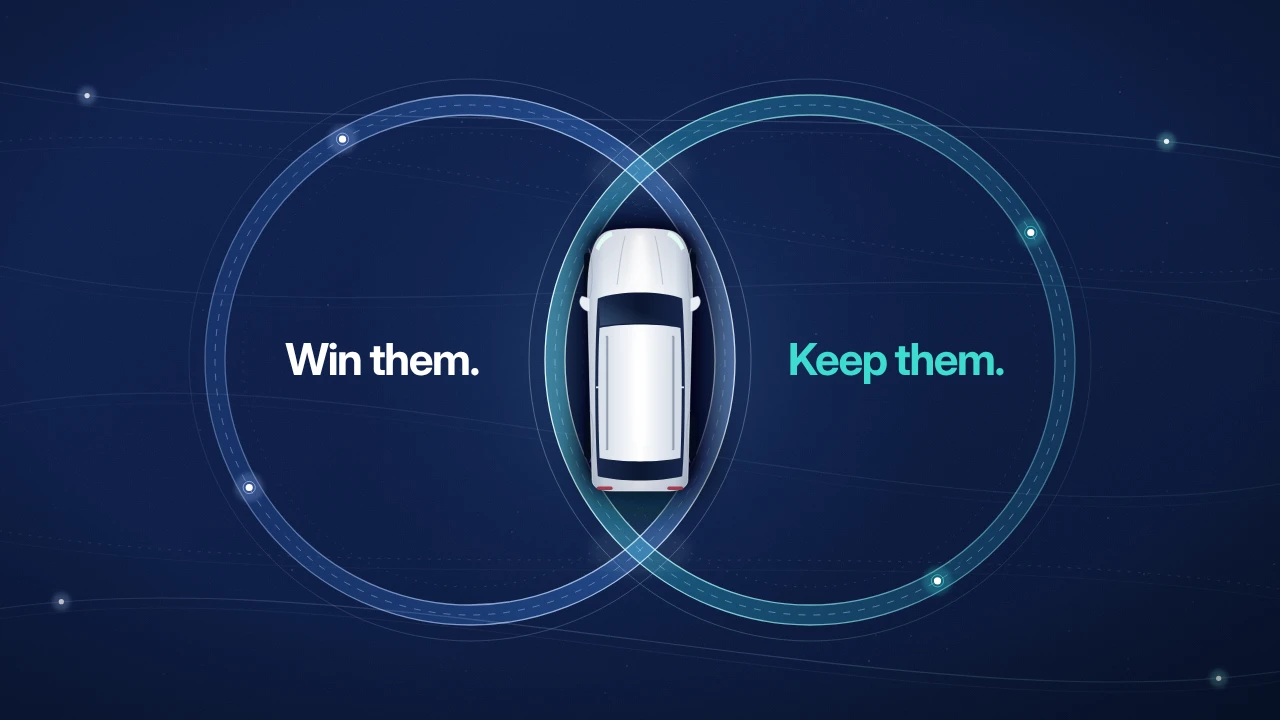
When they do, you can spend money introducing your business to someone who already trusts it. You can also miss an existing customer who is quietly considering a competitor, because everyone assumed they belonged in a loyalty campaign. Here is what marketers tend to get wrong about that, and what to do instead.
"New customer" does not mean one thing
Conquest means winning business from someone else, and loyalty means keeping business you have earned. In automotive, both depend on who is asking.
For an OEM, conquest means attracting competing-brand owners. For a dealer group, it means winning business from outside the group. For a captive finance company, it means earning a finance relationship held elsewhere. And someone who services with your group can still be a conquest opportunity for vehicle sales.
So the first mistake is building an audience before answering a simple question. New to what? The brand, the group, the sales department, or the finance company? Each answer calls for a different message and a different way of counting the result.
Before building an audience, ask: new to what?
Separate teams are fine. Separate decisions are not.
Conquest and loyalty sit with different teams for good reasons. An agency runs acquisition media. CRM handles owner communication. Service focuses on return visits. The captive manages renewals. Each team has a real job to do.
The trouble starts when each one decides using only its own history. A recent buyer keeps seeing acquisition ads from another store. A service customer gets a generic introduction from the sales team. A captive sends renewal messages to someone who has already replaced the vehicle.
The cause is often customer information sitting in different systems. But the real failure is that what one team learns never changes what the next team does.
One customer, four moments
Meet Sam. Sam owns a competing-brand SUV and regularly services at one of your group's stores.
Acquisition: build on what you already know
Sam starts researching your hybrid SUVs. For the OEM, that is a conquest opportunity. For the group, it is a chance to earn a vehicle sale from an existing service customer.
The OEM can speak to what switching brands involves. The group can acknowledge Sam's history with its service team and introduce relevant inventory. A generic prospecting message ignores both.
Ownership: change the conversation at delivery
Sam buys a hybrid SUV and finances it through the captive. That purchase should end acquisition messaging for it and start ownership communication: how the hybrid works, where to get service, how to manage the finance account.
It should also be recorded as three separate outcomes. The OEM won a competing-brand owner. The group earned its first vehicle sale to an existing service customer. The captive gained a finance customer.
Service: recognize Sam across stores
Sam later books maintenance at another store in the group because it is closer to work. That visit should shape service communication across the group. The store Sam used before should not keep sending reminders for maintenance already done elsewhere. Loyalty is hard to earn when your messages show you missed the customer's last visit.
Repurchase: count what actually happened
When Sam later needs a larger vehicle, a different brand in the group has the right one. If Sam buys it, the group kept the customer. The OEM that won Sam in the first place lost the brand relationship. The captive's result depends on who finances the purchase.
Calling that sale simply "loyalty" or "conquest" hides what each business needs to know. For the group, it is retention. For the brand Sam chose, it may be conquest. For the OEM that won Sam, it is a loss.
One scorecard cannot judge both
The third mistake is measuring conquest and loyalty with the same scorecard. Conquest asks whether you earned business from someone who did not buy from you before. Loyalty asks whether a customer who reached a decision point chose to stay.
That is why the metrics differ. Conquest is measured against a market you do not own, so "new" depends on the history you can see. Loyalty is measured against your own customers who actually reached an opportunity, such as a service interval or a lease end. A customer who has not replaced their vehicle yet is not a retention failure. Someone missing from your sales records has not necessarily stopped buying vehicles.
| Goal | What to measure | What to clarify |
|---|---|---|
| Brand or group conquest | New-to-brand or new-to-group sales; cost per acquired customer | What counts as "new," based on the customer history available |
| Vehicle purchase loyalty | Repeat purchases; brand or group retention | Whether customers bought again, including elsewhere where data is available |
| Service loyalty | Return visits among customers due for service | Which customers were due, and the period measured |
| Captive retention | Repeat finance or lease contracts | Which customers reached a renewal opportunity |
Agree on these definitions with the client before reporting starts if you are an agency, and keep them consistent across markets and stores if you are an OEM or a group. Clicks and opens can explain engagement. The aim is to tie each program to purchase outcomes, not just to activity.
What changes when the connection is always on
An always-on approach keeps these decisions connected between campaign launches, instead of rebuilding the picture each time a team starts a new push. You do not need to merge teams or budgets to get there. A model launch may call for more conquest investment, and a large group of approaching lease maturities may justify more retention support. Separate budgets are workable. Disconnected decisions are the problem.
Here is where to start:
- Follow one customer, like Sam, through the programs you already run, and note where one team learned something the next never saw.
- Define "new" for each program before building the audience: new to the brand, the group, sales, or finance.
- Make the completed purchase your first handoff. Decide which acquisition audiences change, who owns ownership communication, and what information passes to them.
- Give each goal its own measure and its own measurement period.
ClicMotion brings customer and vehicle information together so teams can see the relationship behind each opportunity, and its marketing journeys let that history shape who gets which message. The information used to win a customer should still be working after delivery.
Every customer you win becomes someone you need to keep. Your next interaction should build on the last one.
Conquest and loyalty marketing FAQs
What is the difference between conquest and loyalty marketing?
Conquest marketing wins business from competitors. Loyalty marketing gives existing customers reasons to keep doing business with you. In automotive, the two often involve the same customer.
What is conquest marketing in automotive?
It is marketing aimed at customers who currently buy from someone else. For an OEM, that means competing-brand owners. For a dealer group, it means customers outside the group. For a captive finance company, it means a finance relationship held elsewhere.
Can a customer be both a conquest and a loyalty opportunity?
Yes. A customer who switches brands within your group is retention for the group and may be conquest for the brand they choose. Be clear about which relationship you are measuring.
Should existing customers be excluded from acquisition campaigns?
Not automatically. An existing service customer can still be a vehicle-sales opportunity. Base exclusions on the campaign's goal and the customer's current situation.
How do you measure conquest vs. loyalty marketing?
Use a different measure for each. Conquest looks at new-to-brand or new-to-group sales. Loyalty looks at repeat purchases, service returns, or renewals among customers who reached a decision point. Define "new" and the measurement period before you launch.
Is loyalty marketing mainly about incentives?
No. Helpful ownership guidance, relevant service communication, and clear renewal options also give customers reasons to return. An incentive is one possible part of the program.
Do conquest and loyalty need one team?
No. Different teams can manage them, provided they agree on customer definitions, responsibilities, and what changes after each interaction.
Book a ClicMotion demo to see how loyalty and conquest marketing can help automotive companies reach and retain customers.
Back to all articles